Showing posts with label google news. Show all posts

Sunday, June 17, 2012

"Human Skulls Hurled Into Air"

Today's post is a bit macabre but intensely interesting:

Spokesman-Review, June 16, 1912,  p. 1
Our local newspaper does an excellent job with local history, including a This Day in History column by Jim Kershner in which he explores old news stories usually from 100 years ago. The other day he made reference to the above article, which interested me enough to wrestle with the Google News Archive to find the full story:


This sort of casual disrespect of native remains was too typical of that time (and of our own) and the case of the exploded graves is a snapshot of an era when Indians were being forced out of Spokane and onto diminishing reservations. What jumps out at me, however, are some of the details:
  • The workers, led by Otto Hansen, did rebury the disturbed remains somewhere "nearby." This is admirable, though I wonder if this newspaper article did not serve as a notice to grave robbers who might have disturbed the reburials. 
  • The reference to "brass bands" indicates that the graves were likely from the historic period, as natives on the Columbia Plateau did not possess brass before contact (thought they did have some sheet copper, so there is a possibility the graves were precontact).
  • It might be worth carefully reading through the Spokesman, and other Spokane newspapers, for a week or two after this story to find further references. 
It is tough to wrestle with the Google News Archives. They are difficult to navigate, hard to read, and have surprisingly limited search features. And yet they are an incredible resources for just this sort of illuminating historical nugget. 

Monday, October 3, 2011

What was the Odor of Early Spokane?


...or anywhere else? This newspaper article about history and smell has been making the rounds. “It seems remarkable to me that we live in the world where we have all the senses to navigate it, yet somehow we assume that the past was scrubbed of smells,” says "sensory historian" Mark Smith. The article discusses current attempts to preserve, for example, the scents of certain endangered plants. It also discusses the difficulty of reconstructing the olfactory worlds of our ancestors. The latter relies on written accounts, chemical traces, and a lot of educated guesswork.

The nose knows, or knew
The article made me wonder if it is possible to know the odors of early Spokane? A quick search through the Google News Archive for Spokane turned up hundreds of stories with the keywords "smell," "odor," and "scent." After sorting out the advertisements and articles clipped from other newspapers, we do get some hints:

  • An 1894 article reported that some of the milk sold in Spokane "smelled like a stable" and was "full of dirt." Bad meat was often detected by its foul odor. A typical article was titled "It Didn't Smell Nice" and documented the discovery and destruction of a entire warehouse full of rotting bacon and hams in downtown Spokane.
  • Stories about alcohol often mention smell, usually as a means of detecting when someone had been drinking. In 1895 Spokane Fire Chief Winebrenner was being investigated for drinking on the job with testimony from various citizens who apparently were asked if they had smelled liquor on his breath. No wonder a 1909 advertisement for a patent medicine to cure drunkenness promised that users would "look better, fell better, and smell better" upon taking the cure.
  • Similarly, a teacher in Indian Prairie was fired when his students detected the smell of tobacco about him.
  • An 1896 Chinese New Year celebration was notable to the American reporter as much for its scents as its sights, including the large quantities of incense and the delicious smells of the exotic food. Yet a few weeks earlier the Chinese quarter or Spokane was described as "Vile Dens of Vice." The article continued: "In every place entered the air was reeking with the foul smell arising from the fumes of opium and the crowded condition of the ill-ventilated rooms."
  • On the other hand, two culinarily-challenged Spokane police officers in 1912 falsely arrested two black residents when the policemen mistook "the smell of garlic cooking with a roast in the oven" for opium smoke. The article dwells on one of the arrested pair, "Phil Chapman, colored dandy." In an apparent effort to justify his suspicions, Officer Edwards "declared that Chapman, a negro barber from Butte, had the finest trunk and array of clothing he had ever seen carried about by a black man." 
  • One also finds a greater use of bad smells as a metaphor than is common today. Judges would "smell out evil" while the Italian government was "in bad odor." The greater use of such language suggest that smell was a more important part of the sensory landscape than it is today.
  • There were good smells as well. A 1916 article "Spring, Lovely, Smelly Spring" enumerated the intoxicating scents: "There is the pleasing smell of wet asphalt and damp earth after a shower or sprinkling. From the river comes air cooled by the spray from the falls. From Hangman Valley the south wind breathes a perfume that no laboratory but nature's could mix..."
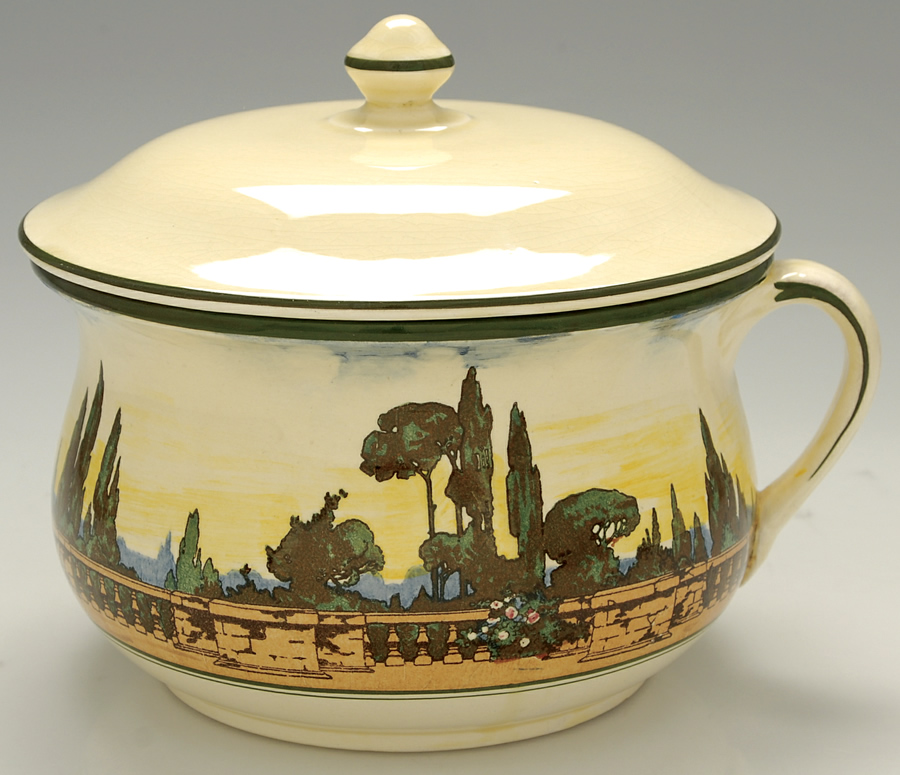
Not a cookie jar, despite what the
tag at the antique store might say.

Since newspapers only publish items considered newsworthy, they are a very imperfect source for discovering the smells of early Spokane. Photographs of the early city show a steady stream of horses on most streets, we know that bathing and clothes washing were less common than today, and chamber pots were a common household appliance. These were typical smells, and have to be added to list of atypical smells that produced news stories. Newspapers are only the beginning of exploring the history of smells.


Monday, October 25, 2010

What Happened to Google News Archive Search?

Update: Paul Jeffko of SmallTownPapers (which looks to be worth checking out) points out that Google does have a page listing all of their digitized newspapers. Thanks Paul!

I have been pretty enthusiastic (giddy, really) about Google's project to put historic newspapers from Spokane and other cities online. Though this has been an incredible resource in my local history courses, it was never easy to get to the historic newspapers, with the search function buried several layers down in the advanced menus at Google News.

The, sometime late this summer, Google News was redesigned and the ability to get to the historic newspapers disappeared! The good news is that the newspapers are still online and the search function for them still exists, you just cannot navigate to it from the Google News site. So, dear reader, here you go:

Google News Archive Search - Advanced Options

I have no idea why Google buried the link or what this means for the future of historic newspapers at Google. The official Google News Blog is silent--though maybe if I combed through the About News Archive Search pages I'd find out.  If you have any rumors or speculation, feel free to share them in the comments.

["Auto Carrying Giant Potato..." from the Spokane Daily Chronicle, June 22, 1915 p. 2.]